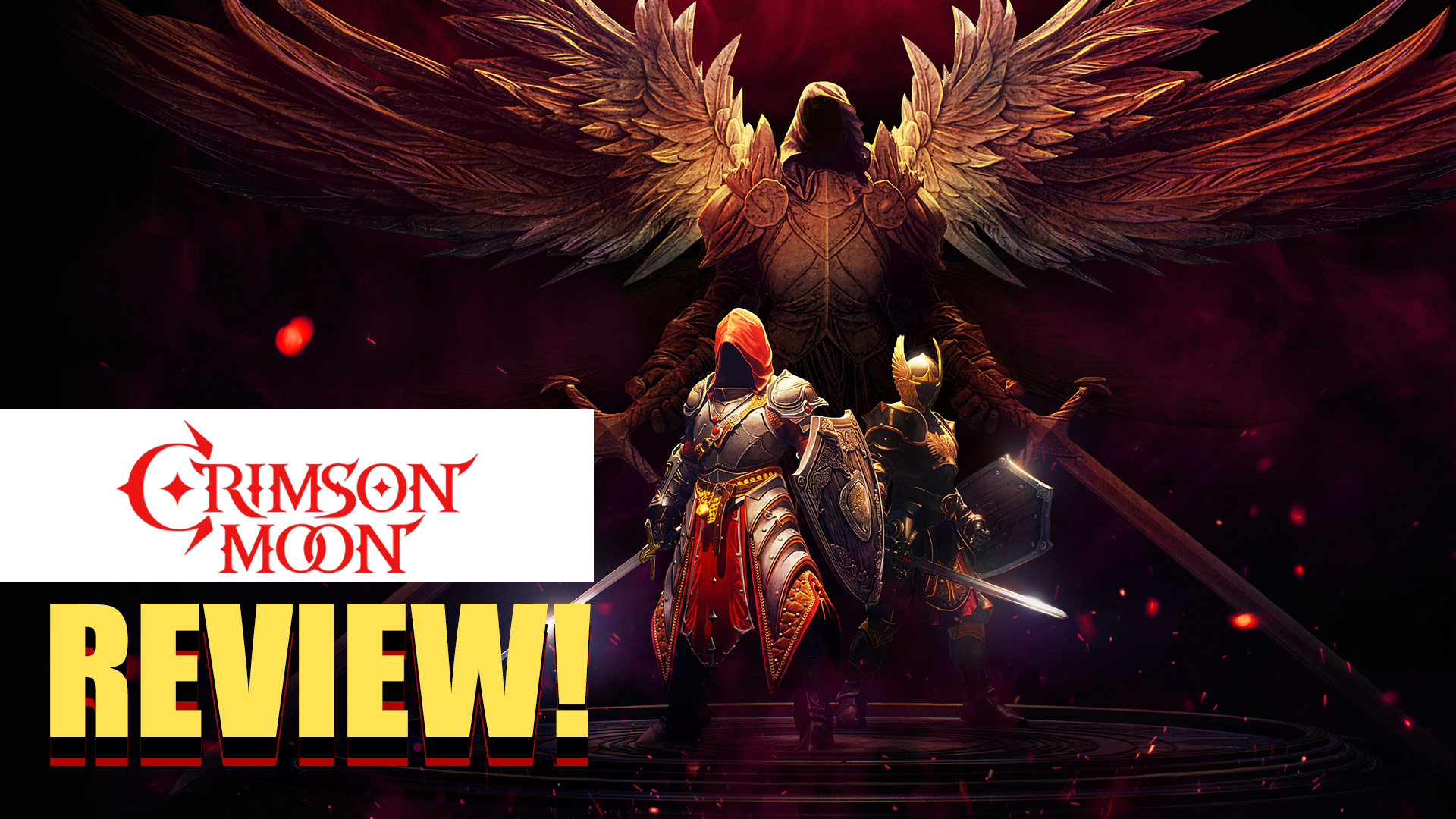
Crimson Moon knows exactly what kind of game it is, and it nails the execution — especially if that execution is of a demon god.
Back at Summer Game Fest I had the chance to demo Crimson Moon. I had never heard of the game until the invitation came through for a meeting at the show, and with an hour of open time I clicked “accept.” I have to admit that about 10 minutes before my session I found myself at a bench outside hurriedly doing some background research to actually see what the game even was. Thankfully, the ProbablyMonsters team seemed to understand that many of us there weren’t familiar with the project, and that it could almost be a more welcome appointment that way. I still remember the little monologue I heard: “We know players have a lot of games they’re playing, and a lot of AAA games that are all vying for their attention, games trying to be the perfect experience with blockbuster funding and hundreds or thousands of developers. We’re not aiming for that AAA experience. Instead we’re aiming for something more like AA, where it’s a game that respects your time, packs in as much enjoyment during that time, and does so in a way that’s going to be consistent all the way through.”
Crimson Moon is a video game-ass-video game that respects my time and is enjoyable all the way through, and I’m very happy it exists.
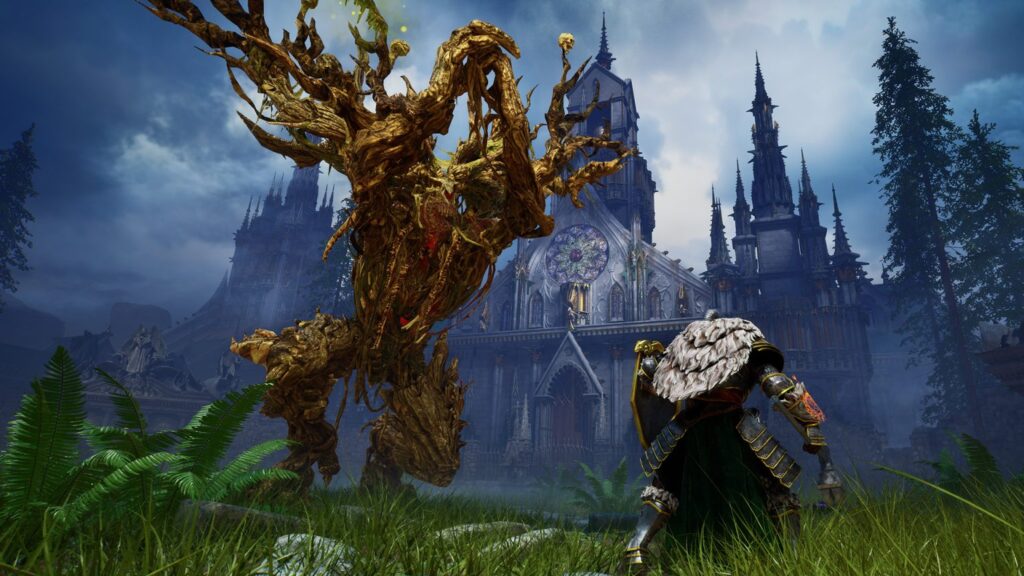
The game itself is a bit of a combination of a few genres. It has Soulslike elements, Action RPG and hack & slash bullet points, classic PC RPG feels, and it’s all put together through rogue-like runs. We take control of a Nephilim, a part-angel part-human member of an order (of the Crimson Moon!) that needs to rescue a city overrun by Evil. We need to defeat the enemies within the city’s many districts, collect stones that house the souls of the Gods, and destroy the Evil once and for all. It’s a fairly basic plot that doesn’t get a whole lot of active storytelling, foregoing most of the typical cinematics for discoverable lore and conversations within the church that serves as our hub between runs. The lite “plot” serves mostly as a way to give reason for the locations and enemies we meet, and by the end of the game we only kind of know why we’ve been doing all of the fighting. It’s so in the background to the game’s action that we kind of don’t really need it, or care, for that matter.
That action is what Crimson Moon is built around. The movement and attacking feel great. Have I played this game before? No, but I’ve played enough of the games in its related genres that it feels recognizable. That familiarity leads to a sort of accessibility aid in that I already know how to move, to attack, to gain advantage in battle. The game has strong attacks, weak attacks, ranged and more, and yet it may be the shield maneuvers that quickly became my go-to. The game has a surprisingly huge variety of weapons we can acquire and learn, but that blocker is the same throughout, mapped to the left bumpers. That sheer variety of tools is also can be a little overwhelming at first but we get used to it by the time we’ve started heading deeper into the town and start winning and finding loot. Sometimes a new sword or glaives or helmet will pop up, and sometimes it’ll be rare, and then sometimes the stats will be really nice but there won’t be any beneficial associated abilities glued on. We’re continuously evaluating what we find, switching into or storing the ones we cant to keep and use.
The battles are great, too, although there’s not a whole lot of variety. We can sort of smash our way through a lot of the lesser enemies, but then get immediately crushed by a heavy or mod-boss that feels a bit too strong. Because it’s a rogue-like we can continue to grow our hero, heading back into the church when we inevitably get crushed. This area has things like a library, weapon-sellers and a blacksmith that can upgrade our starting equipment for each run. Alongside our level grinding that makes our return into the town and its missions a little bit easier. The stages are long though, and we still get crushed, but the game does let us partner up with a friend and take on the missions so it’s not as much of a slog. It scales well, so if there are two of us the enemies and number of them adjusts.
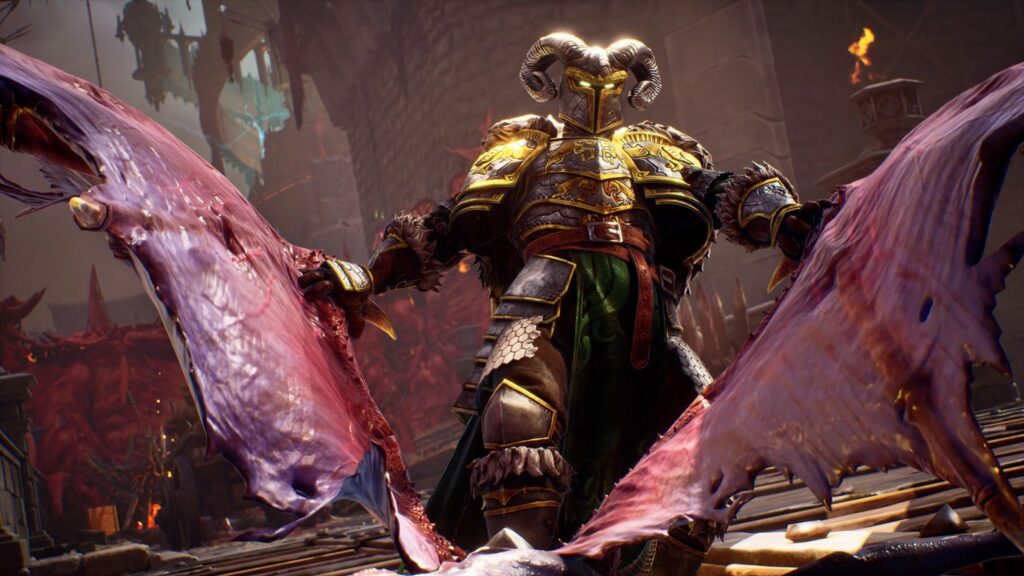
It helps that the game runs on my old-ass laptop, too. My aging 2020-era MSI doesn’t break a single sweat pumping out the great gothic visuals and moody metal music.
Crimson Moon isn’t breaking any molds. It’s not trying to. It’s a game that understands its place in the landscape, focusing on delivering a solid, almost comforting experience that’s left me completely satisfied. I know what I’m getting with the game, and I’m happy getting it.
This review is based on a Steam code sent to SideQuesting by the publisher.
RATING: 3/5