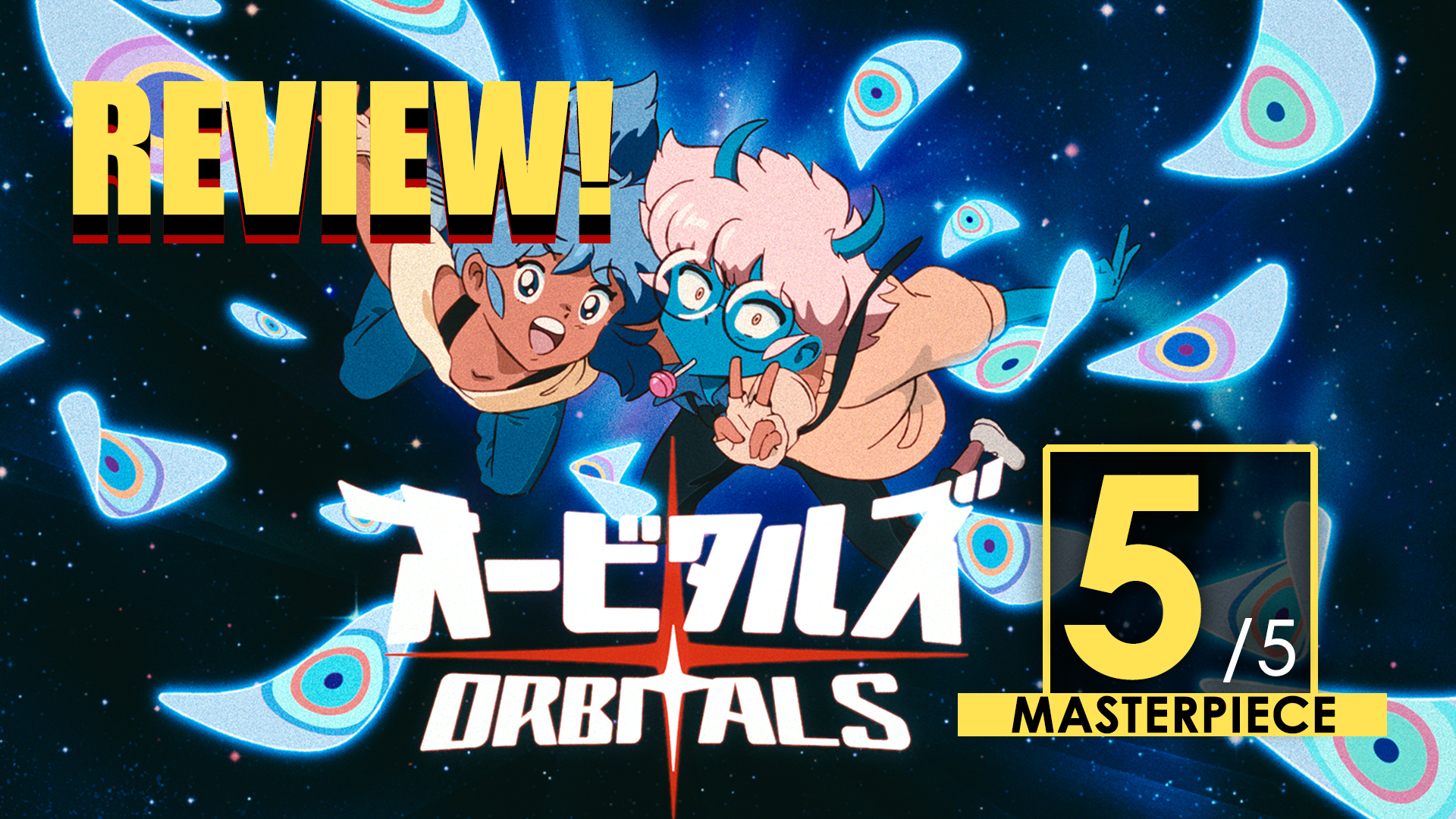
Orbitals is the most wonderful co-op experience I’ve had yet
I think Orbitals is directly aimed at me, with a pinpoint high-intensity laser that can cut a micron-level hole in my brain.
I grew up in the early 80s, an era of weird anime that was getting humorously poorly translated over to the US, bad ports of arcade games onto home 8-bit consoles, and sitting with my younger brother way too close to the CRT TV to enjoy both. It was a time when everything we did, every bit of media we took in, we did together. It was co-op even if it wasn’t co-op gaming. That was what sibling life was in the 80s; as kids of immigrants we didn’t have much, we only had what was right in front of us, and every single thing was shared.
Orbitals is built on that premise. We share experiences, we share references, we share history. We share tools, we share ideas, we share trust. We remember what that era was like, and we experience it again, truthfully, and not just in nostalgia.
The game itself is incredibly competent. Built well with easy-to-navigate 3D worlds, magical 2D platforming and beautiful spaceflight, it has fun, engaging moments and puzzles and ideas. It has fantastic characters, a really silly, fun plot, and feels so good from a mechanical standpoint. The game takes action adventure and makes it communal, like playing a single-player game and passing the controller back and forth even without passing the controller back and forth. And all of that works wonderfully even if we don’t have those 80s built experiences.
But if we do?
Holy shit. We don’t just play this game, we get transported back to that childhood. (It’s cliche to say it, but it’s genuine here.) There are times when J.J. and I play that we’re giggling and smiling, whether internally or audibly, and not because of what we see on our screens but what we feel when we take it all in. And there are times when my daughter and I play that she blurts out “this is cool, I love this style, this is a neat puzzle.” I smile for different reasons, as does she, where I’m happy she can subconsciously connect with my youth while she consciously helps me complete an innovative space task.
The game nails what it claims to be.
From that catchy opening theme song, to the closing action sequence, the game has me flowing with an incredible energy that feels so rare on its own, and yet it’s so consistent here. There’s no slowdown, there are no dips, the game is always moving forward on to the next part. Even with all of the unique obstacles there’s no frustration — there’s just a seemingly regular stream of “oh, oh! OOOOH!!!! THAT’S IT! That’s it because OF COURSE that’s it!” The puzzles we solve, the tasks we take on, are so true to the source material that we can overthink them. It’s not until we take ourselves back a few decades that we realize that the answers are usually pretty straightforward, even if the task itself is challenging.
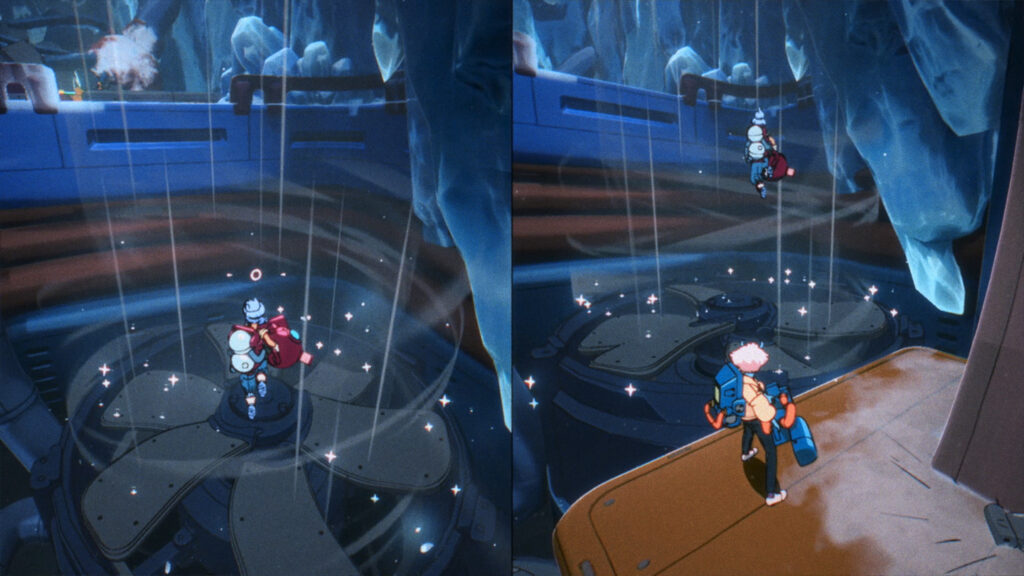
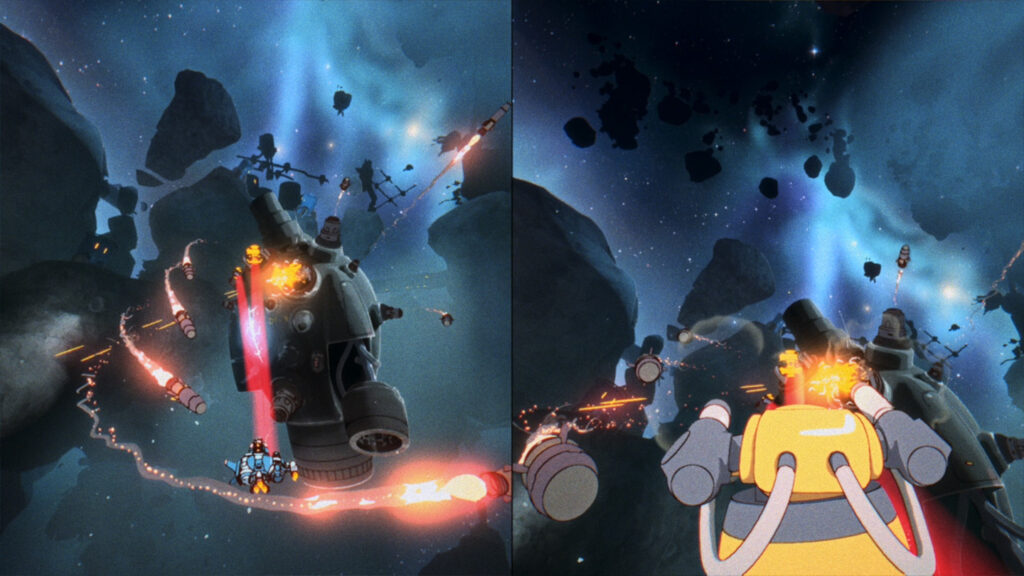
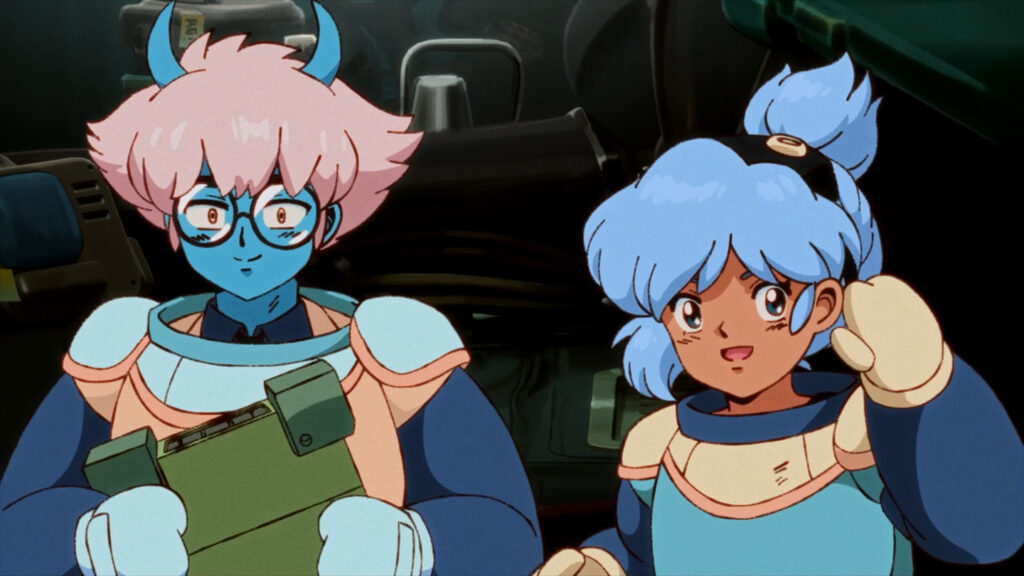
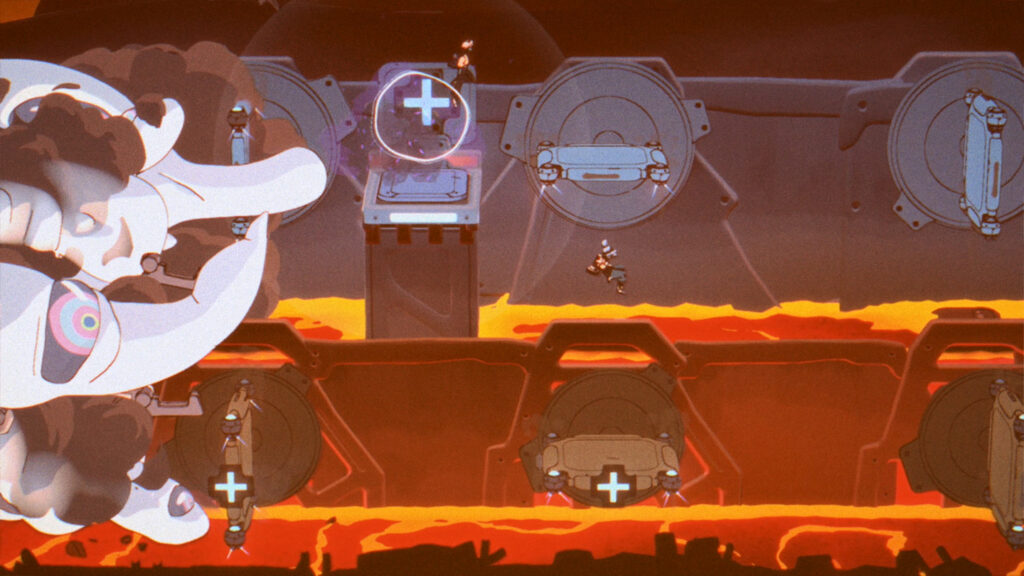
I love the soundtrack, with its pure 80s synths and vocals, and I love the characters. Maki! She rocks! Our space cat is great! The dark haired stereotypical leader whose name we forget all the time is great! And I absolutely love that art style, focusing on color and line weight and texture as a functional homage to the animation cells of the anime it’s giving nods to. It engages us and keeps us enthralled like a singular fantastic movie, never slowing down, perfectly pacing itself to prevent us from getting burnt out. It’s as if it nudges us without holding our hand, and never lets us get lost (in spaaaace).
What Shapefarm and Kepler Interactive have done is truly a special piece of art. It’s something I’m personally going to remember for the rest of my gaming life, because I’ve already grown up with it, but now I have that encapsulated in a singularity.
Orbitals is above and away my favorite co-op experience of the year, of several years, and like the next few too.
This review is based on a Switch 2 code sent to us by the publisher.