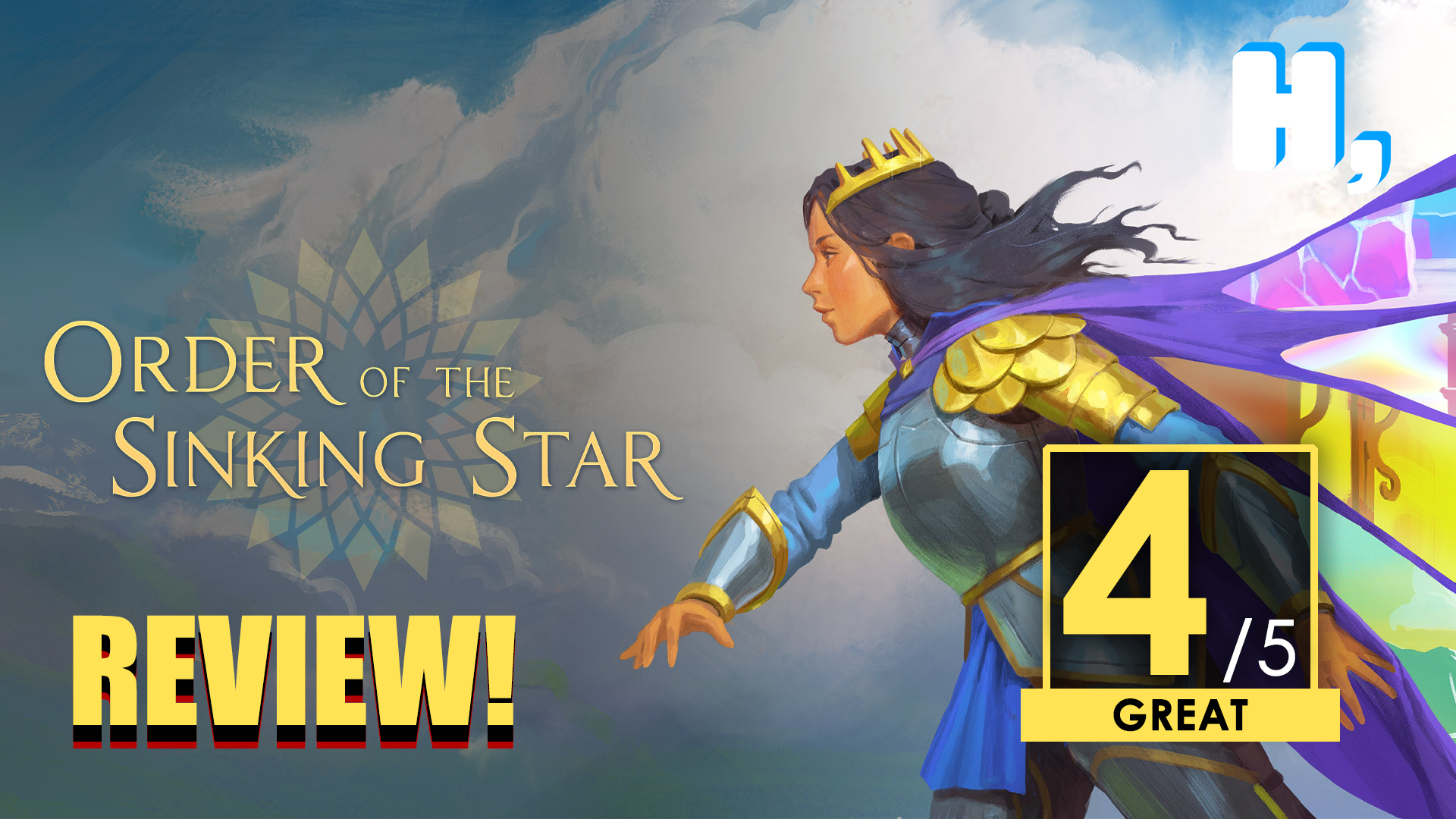
I need to re-learn how to play games
Let me carry you, dear reader, through an example of how Order of the Sinking Star pulled my puzzle abilities apart.
I’m very singularly tracked when I play games. I’ll plow through a story, but if I find a side quest I switch motivations, focusing completely on it, consumed by it, even if I’m vastly underpowered or under skilled. When I play puzzles games it’s much the same way, and in Thekla, Inc’s latest game I carried that in.
I’m pushing rocks and moving mirrors and getting pretty far into the islands biome. When I’m get stuck I just sit with a pencil and paper and scribble ideas, try them out until they work and then move on to the next obstacle, even if it takes a few frustrating minutes. It’s satisfying in the “I know I will eventually figure this out” way that lets us power through games.
But then I hit the puzzle. One that leaves me working for almost an hour, just trying things. Move this rock, push this onto a lily pad here, walk over there, try to get these two to bounce. Nope. The methods I had just used previously aren’t enough here. I’m stretched, I’m tearing my hair out.
My singular track mind isn’t working.
And so, after falling on the sword and mentally giving up I go to another of the game’s regions, moving speedily through it until I hit, yes, a similar puzzle. Then another area and another, doing the same. Until suddenly, one of the puzzles I solve activates something in that very first one.
Rushing back to the islands and to that first mind numbing hard stop I am, this time, able to quickly breeze through it. While some of it is due to just taking some time away, some of it is also due to how the puzzles, even the seemingly singular ones, are linked together. I feel brilliant. I AM brilliant! Until I get stuck again 25 puzzles down the line.
But now I’m a little more secure in how to solve these things: just power through it until I can’t, and then eventually come back.
The big tell about this game is perhaps the first word in its title: “Order.”
The game has different puzzles that can be solved singularly, but the real connection we make and the rhythm we figure out is that the puzzles work off of each other, sometimes opening characters with abilities we can use and other times unlocking things we couldn’t access. It’s layer after layer (after layer) of puzzles, and it’s brilliantly designed.
The puzzles are juicy. We start with simple tasks like pushing rocks, then learn to utilize mirrors for island hopping, adjusting gates based on colors, and then combining those and more using characters which have different classes and abilities. The game is essentially four other quilted together, pulling ideas and capabilities together, strings that lead from one point to another. It’s like a tabletop campaign mixed with my Sunday morning Sudoku, and goes great with a cup of coffee or eight. It’s a little touchy in controls sometimes, prompting me to use the D-pad more so than the analog stick, but a VERY gracious rewind and reset system allows me to undo any errors, plan, and go again.
All of the puzzles, even the terrestrial, singular ones, are joined together into one giant map. And then that map is split into smaller maps within. Clearing enough of the regular and smaller maps may make us feel like Einstein, balancing ideas and moves and motions back and forth around the overworld, but then just as we think that we’ve got it, that we’re nearing the end, the world seems to double, quadruple in size, linking even more areas together, creating new combinations, revealing new characters and story elements.
It’s kind of astounding how it all works together so fluidly. But it’s also a little difficult to keep track of it all. As that map grows, as those puzzles get more and more complicated and require us to do multiple tiers and types of thinking, it gets just as complex to juggle it. We really have to be ready to take it on.
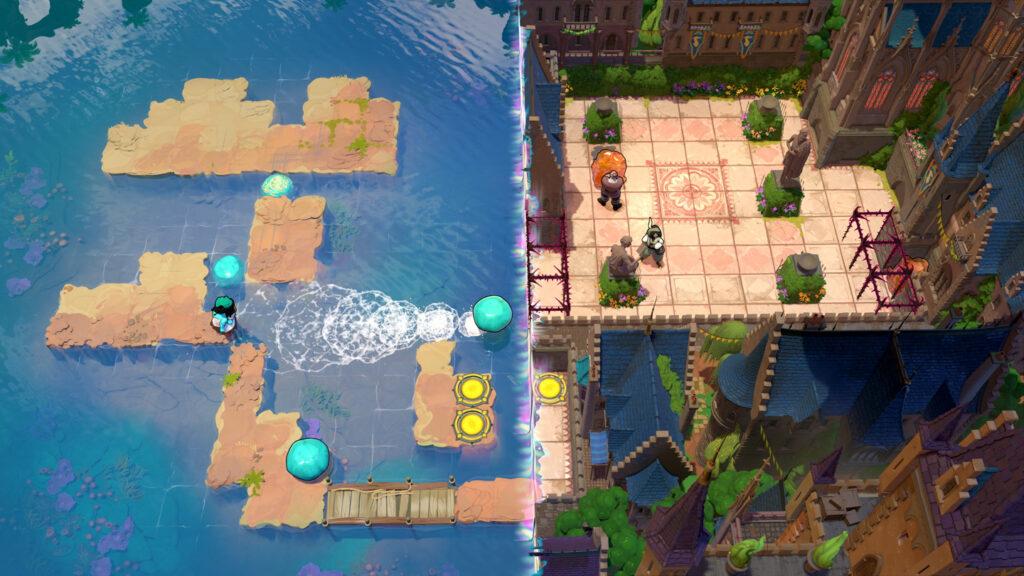
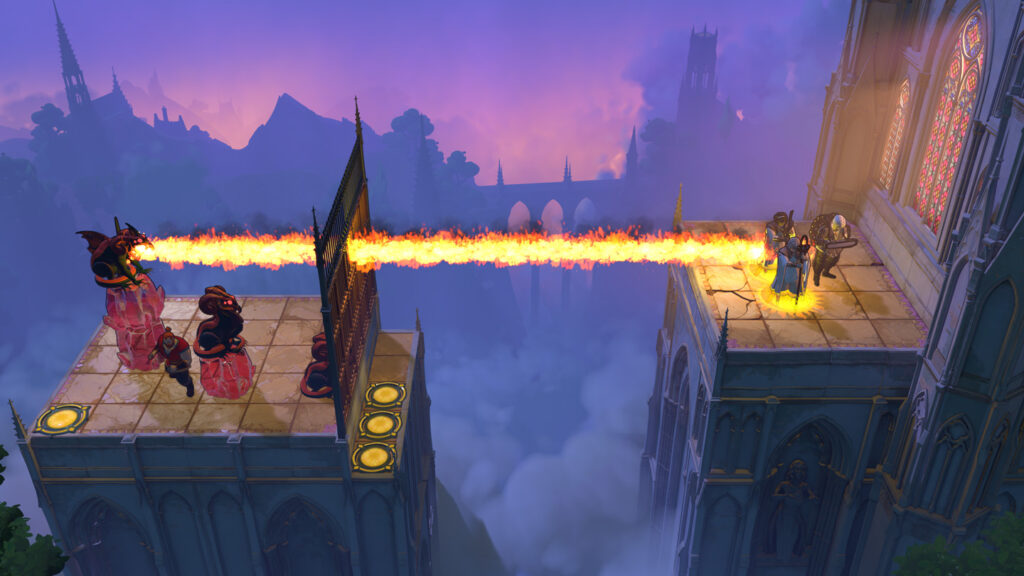
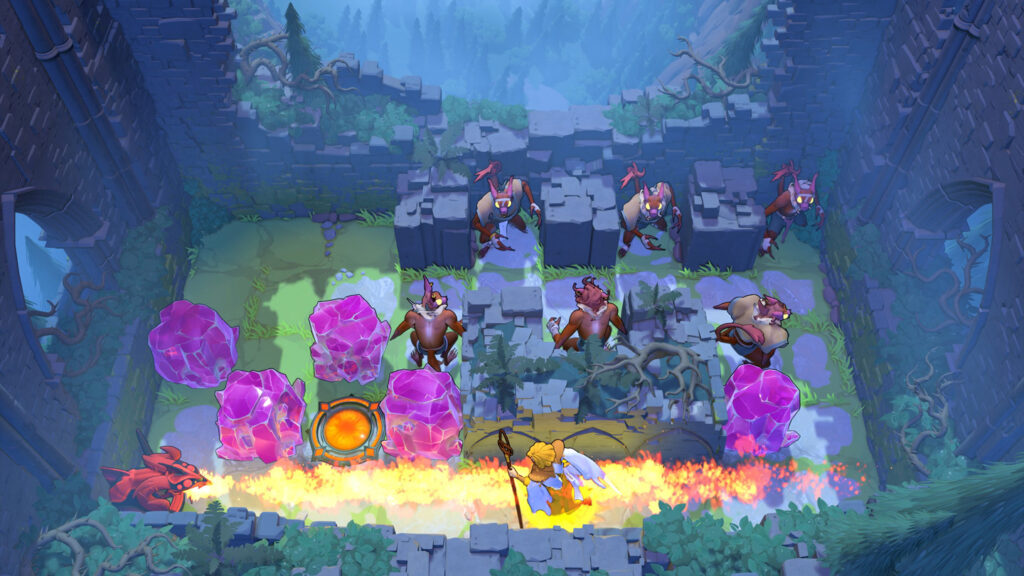
There’s a plot, but it’s kind of in the background and only jumps into the forefront as needed to level set our heroic endeavor, which is fine for me: I just want to do more of these puzzles and then see how the puzzles work together. I only wish I could move quicker between the locations in the worlds where I left off at the last puzzle, but it sometimes feels like I have a lot of running to do between them. Interestingly, the way we may figure some of the puzzles is by running past them in the opposite direction, seeing those world links form in real time. Zooming out (which is a tad bit awkward in its animation, honestly, at least on the Switch 2) helps us see the whole playfield, allowing for us to plan our paths as we move around. It’s a lot of backtracking, sometimes too much, if we’re in the zone in a specific quadrant, but it works itself together.
Order of the Sinking Star is absurd. It’s fluid yet elaborate, it’s filled with multiple paths, different ways to clear puzzles and multiple fascinating endings. There’s nothing else like it that I’ve played. It’s a little obtuse, clearly a game for the puzzle sickos, and especially for those with A LOT of time and patience.
And a lot of coffee.
RATING: 4/5
This review is based on a Switch 2 code sent to the Editor by the Publisher/PR. Read about our review and rating process here: Review Process