The translation of Colleen Hoover’s book Verity to the big screen seems to be missing several chapters
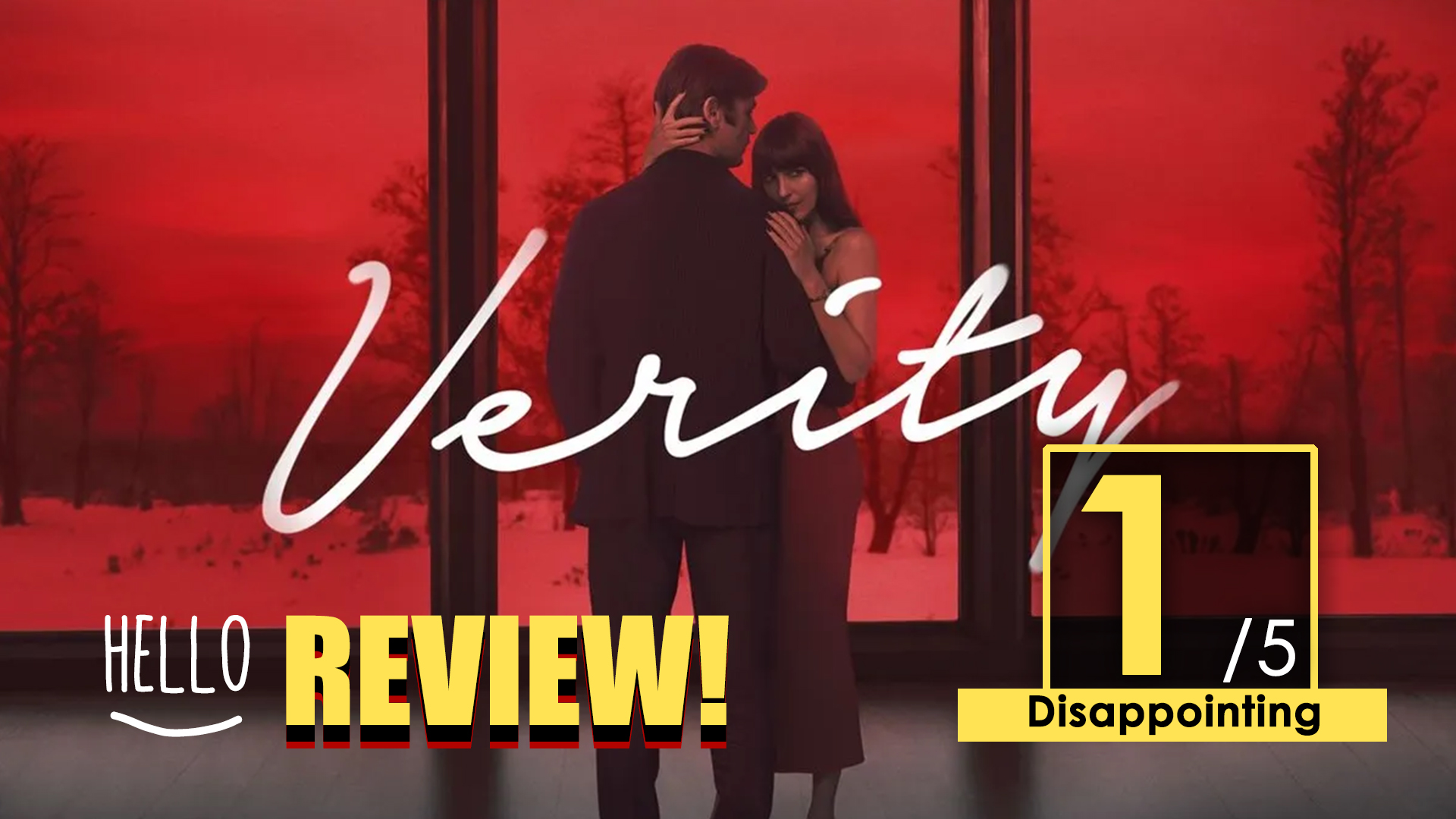
Psychological romantic thrillers need to have three distinct things to be compelling: a dark mystery, understandable emotions, and a plot to bring them together. Director Michael Showalter’s big screen adaptation of Colleen Hoover’s Verity could have had that, but it moves so fast to get to the big twist that it whiffs on all of the necessary aspects along the way. And it’s never a good sign when the big twist is so in-our-face foreshadowed about 5 minutes into the film that we’re just waiting to see how long it takes to get there.
Hint: too long.
The movie itself feels like whole chapters and plot points have been cut and hacked, much like the female actors’ weird blood fetish, so that Showalter could get the entire thing under a specific length of time. That doesn’t do it justice, though, because not once do we feel like there’s any actual romantic buildup. We see characters being friendly in one scene and then passionate in the next, then angry, then friendly again. It’s sort of all over the place. Stuff just happens, and we’re told it happens, and we need to be ready to move to the next scene pretty quick.
Lowen (Dakota Johnson) starts off as a passive, down on her luck writer whose work is going nowhere when she’s asked to complete a book in Verity’s (Anne Hathaway) series by her husband, Jeremy (Josh Hartnett). The film is set in a picturesque upstate cabin home, with a very Autumnal color palette and a deliberate softness meant to evoke the dreamy meet-cuteness of the situation. Showalter knows his demo for this, the Book Club That Meets At Coffee Shops, so he’s pinpointed how to best present the visuals to them.
There are some purposeful tensions designed into the film in an effort to keep us wondering about what the characters will do next. Like any fish out of water romance there’s plenty of “will they, won’t they” when it comes to love interests and vindictiveness, especially when some of those players are already married. But while there’s a big reason that Hathaway and Johnson’s characters rarely interact, Hathaway doesn’t get nearly enough screen time to flush out her character. It manages to dissipate the tension far too quickly, knowing that they’re hovering around each other without much real bite. The film even has some very light jump scares, the kind that dip their toe into the water of getting a reaction without fully needing to be there. In fact, during our particular screening, the person sitting next to me kept speaking to Johnson’s character in critical scenes. “Girl. Girl, no. Naw, girl, don’t do that! Come on, girl!”
But even those reactions kind of pale in comparison to some of the ones on screen. Verity is almost too over-performed. None of the characters enter the film inherently evil, but they’re not good either. The taffy-pulling at which they hop from one mental state to another, from meek to mayhem and back, moves at light speed. I can’t tell if this is intentional to tell the story, or if it’s the result of the film editing, but it hampers the film and ultimately makes all of the characters (even the Crawford’s young son) unlikable. It makes the ending of the movie impossible to comprehend.
Verity is all over the place. We know what’s going to happen, we wonder how it’s going to happen, and then we watch it kind of fumble its way through actually happening. It’s built on reactions, but never giving us believable interactions and human emotions to justify them. The movie’s tag line is “There is no light where we’re going”, but I’m not sure it knows where it’s going. I sure don’t.
RATING: 1/5
DISAPPOINTING
This review is based on a Press Screening attended by the Editor and arranged by the Distributor.
Check out Verity in theaters now.
Read about how we do our reviews here.